
The Attack On The US Capitol
Like so many of you, I watched Wednesday's violent attack on the US Capitol--an attempted coup--and felt horrified, angry, ashamed, afraid, and grief-stricken. Ultimately I found myself holding many questions as to what such an event reveals about the state of our nation and ourselves.
Responding To The Attack On The US Capitol
By Rev. Scott Gilliland
Like so many of you, I watched Wednesday's violent attack on the US Capitol--an attempted coup--and felt horrified, angry, ashamed, afraid, and grief-stricken. Ultimately I found myself holding many questions as to what such an event reveals about the state of our nation and ourselves.
I think we should be clear that this was not an isolated incident, but rather an easily-seen symptom of deeper-seated sins that plague us as a collective people. My friends, we cannot remain silent nor passive when presented with a culture that:
Replaces power-at-all-costs partisanship for functional politics,
Uplifts conspiracy theories and rejects facts,
Demands unquestioning loyalty and refuses critique,
Calls for peace without establishing justice,
Seeks to confirm biases rather than engage in dialogue, and
Dehumanizes opposition resulting in eventual violence.
I know that I share blame for helping contribute to these sins--through my own actions or lack thereof--and we all could confess to personal culpability in our cultural failures.
Confession leads to repentance (changed behavior), and as followers of Jesus, we are called to walk humbly, seek truth, offer accountability, engage others openly, embody justice, and love in word and action, including our "enemies."
Jesus so often calls his followers to intentionally live counter to their prevailing culture. My prayer is that we could offer a counter-cultural witness in this moment as our nation wrestles with its future and our world watches on.
Lastly, let us pray for and receive the endurance of the Spirit, knowing that the work of personal healing and collective renewal that we have before us will be long and arduous work. Our work is not conditional upon who occupies the White House; it continues until heaven is at home upon on the earth.
We need change.
We need healing.
We need renewal.
May we embrace this as the work of our lifetimes.
In Christ,
Scott

Why Everything Is Spiritual
Richard Rohr is quoted as saying, “God comes to us disguised as our life.” So often we go to church or some other spiritual event and hope to experience God there. But the reality is that our lives are already holy. We are God’s beloved. That is the gospel. Bell tells us that even at the cellular level you can find connection to something infinite.
Why Everything Is Spiritual
By Aaron Manes
Henri Nouwen, one of my favorite authors, often includes spiritual exercises in his books. In one of his spiritual exercises, he invites us to spend 30 minutes in a guided meditative prayer. For the first 10 minutes you breathe and repeat “Jesus is God’s Beloved.” For the next 10 minutes you repeat “I am God’s Beloved,” and for the last 10 minutes you say “Everyone is God’s Beloved.” Think about that. For 20 minutes we are invited to say that not only are we God’s beloved, so is everyone else. It is here that we are able to identify with Jesus who, before his ministry begins, is called beloved by God.
Jesus didn’t have to do anything other than be alive, wading out into dirty water. Can you see it? Jesus walking into a muddy river toward a crazy man named John who has cricket parts in his beard. This guy has to smell horrible but Jesus presses on. In the midst of this scene, Jesus is girded by a voice that tells him he is beloved. He is God’s child.
In his book “Everything Is Spiritual,” Rob Bell tells us about his grandparents, his college years, the ups and downs of ministry and how he and his wife ended up in California after pastoring a mega-church in Grand Rapids, Michigan. In the midst of these stories he is reflecting, listening, and looking for the divine moments, no matter how small they may be.That is the work of spirituality.
Richard Rohr is quoted as saying, “God comes to us disguised as our life.” So often we go to church or some other spiritual event and hope to experience God there. But the reality is that our lives are already holy. We are God’s beloved. That is the gospel. Bell tells us that even at the cellular level you can find connection to something infinite.
So today, reflect on your own story. Breathe in the fact that the universe has expanded to create and include you. You, your family, your neighbors, your community - they are all beloved. They are all spiritual. You don’t have to go somewhere holy to find God. God is there, disguised as your life.
Click here to connect with Aaron | Leave us a response in the comments below

The Greatest Privilege
Speaking out, then going back to the routine in our lives, isn’t fully unmasking justice. Why? Because unmasking justice is a long term commitment. It’s not just a “re-tweet” or “share” on social media. Injustice is something we will encounter over and over, time and again, in our lives and beyond. It’s not a one time thing.
The Greatest Privilege
By Rev. Cathy Sweeney
At Arapaho UMC in Richardson, Texas, we are in the middle of a sermon series titled, “Unmasked.” We are acknowledging various attitudes, feelings, and actions that need to be unmasked in our world right now. This past Sunday’s sermon was about Unmasking Justice, listen to Pastor Scott share about it if you’d like.

I was struck by his first point about problems we may encounter when we unmask justice. Here’s what he says:
“The greatest privilege is the ability to “move on” from an exposed injustice.
The call of Jesus is to take a sustained look at injustice in a culture of sound bites.”
What’s he saying here? Perhaps it’s this:
Speaking out, then going back to the routine in our lives, isn’t fully unmasking justice. Why? Because unmasking justice is a long term commitment. It’s not just a “re-tweet” or “share” on social media. Injustice is something we will encounter over and over, time and again, in our lives and beyond. It’s not a one time thing.
I spoke about this recently in response to George Floyd’s death, and the response from those who were calling out the injustice of the incident. I was asked to share a short devotional as part of a series of devotionals on lamenting. I chose to reflect on the biblical story of Ruth in that devotional, which you can hear on Facebook, or you can read on here:
The story of Ruth is not just about Ruth. The story begins with a famine that forced a man and his wife, Naomi, out of Judah and into Moab (current Jordan). So they were in a strange land. Over time, they had 2 sons, and the sons married women named Orpah and Ruth (who would be Moabites, because that’s where they are living now). In a series of tragedies, Naomi’s husband dies first, then her two sons die. The women are left without husbands, which is not a good place to be.
So Naomi decides to leave the land of Moab and return to Judah. Both of her daughters-in-law are initially willing to join her, but Naomi encourages them to stay, so that they would have a better chance at finding husbands. (Yep. She said it. I’ll talk about that at a later date, this ‘women only have value if they are married’ challenge.) Naomi didn’t just say it once, she said it a few times. “Go back,” she says, “May the Lord grant that each of you will find rest in the home of another husband.” (And again, let’s just acknowledge that this statement is at best, problematic, when expressing that all are children of God in their own right, not dependent on another human being. We are called to be in community, and we need each other, to be sure. But a woman’s value is not based on her marital status.)
Orpah takes Naomi’s advice, kisses her goodbye, and returns home. Ruth, on the other hand, is in this for the long haul. Here’s what she says to Naomi (1:16b-17b, NIV):
“Where you go, I will go, and where you stay, I will stay. Your people will be my people, and your God my God. Where you die I will die, and there I will be buried.”

Naomi had become Ruth’s family. They had grown to love each other as mother and daughter. They had experienced grief together. Ruth had a choice. She could stay where she was comfortable, return home, and likely marry someone. Or she could stand by Naomi, journey to an unfamiliar place, and continue to be in relationship with her, until death.
Ruth is clear in her actions. And my brothers, sisters, and siblings, we should be, too.
I’m speaking mostly to my white siblings here: are we unmasking justice when George Floyd is killed, then retreating to the comfort of our own homes? What do we do, then, when Jacob Blake is shot and killed? Are we not also family? We, too, have a choice. We can stay where we are comfortable, return home, and wait for the next incident of injustice. Or we can stand by our siblings, in perhaps an uncomfortable place, and continue our journey together. Just like Ruth and Naomi.
What’s our action that says, “Your people will be my people, and your God my God?”
I submit that our action to unmask justice comes from our hearts and from a faith that truly believes that every person is a cherished child of God.

It’s in gathering together, sharing a meal, and learning more about each other. It’s in the action of building community – a Beloved Community in which we can all walk without fear of each other and in which we can grow in love. It’s a community that becomes family.
Because when we build family, it’s a whole lot harder to return to our comforts when our brothers, sisters, and siblings are dying in the streets. When we build a family, privilege is no longer being comfortable. The greatest privilege is in the honor to stand with each other, until the Beloved Community is complete.
—- Originally published here.

July Ministry Update
Well, I have now served as your pastor for almost one whole month, and I continue to say my excitement in calling AUMC home only increases. As someone experiencing our church as a “new member,” let me say that our signature hospitality and warmth, passion for local and global justice, and commitment to building authentic Christian community shine through in both word and action.
July Ministry Update
Greetings AUMC Family!
Well, I have now served as your pastor for almost one whole month, and I continue to say my excitement in calling AUMC home only increases. As someone experiencing our church as a “new member,” let me say that our signature hospitality and warmth, passion for local and global justice, and commitment to building authentic Christian community shine through in both word and action.
I have now enjoyed over a dozen listening sessions, and have received so many stories and dreams, as well as helpful feedback. One thing I’ve heard consistently is a desire to be regularly updated on the leadership, direction, and decision-making of AUMC, since we’ve lost all that typical “hallway talk” that used to keep so many of us informed. We’ll send out these monthly AUMC Ministry Updates moving forward so that we can all be aware of the great work that continues even in the midst of a pandemic!
“We Miss Each Other!”
That’s the comment I’ve heard most in my Listening Sessions. Several weeks ago, AUMC assembled the Safe Return Task Force, composed of staff and lay members. I want to remind us that we’ve decided as a congregation that we will use the Dallas County COVID Color Coding system (say that five times fast!) as a guide for our reopening strategy. Currently we are in the “red” zone, which means no in-person Sunday worship and only gatherings of 10-or-fewer people on campus that are deemed necessary. Bishop McKee has said that churches in our district will not resume in-person worship until at least after Labor Day Weekend, and he will send an update in August. We will send more information on our safe reopening plans in the coming days and weeks, so that we can know what life will be like on campus this fall as in-person gatherings are possible.
Investing in Online Worship!
While this season has been challenging, there is a lot to celebrate as well! It’s been said before, but our online worship experience continues to increase in quality and reach. July would typically be a “slow month” in the world of Sunday worship, but this month has been our highest average live attendance this year! We can credit that in large part due to Aaron Manes’ leadership and his team of tech volunteers who have taken us from a single iPad in March, to a multi-camera, multi-location experience of excellence in worship.
We know that online worship is not just a temporary solution to the pandemic, but a trend that will continue permanently into the future. Even prior to COVID-19, most visitors do not attend in-person worship until they’ve seen a church’s online presence. Our Leadership Board has decided to invest in online worship by upgrading our Sanctuary in a few key ways. First, we’ll be adding a robust lighting system that will allow for consistent, attractive lighting in the space, greatly improving visibility both in-person and online. We are also upgrading our sound board to allow for crisp, clear, and reliable sound in worship. Lastly, we’re adding a sophisticated permanent camera to give us greater flexibility and to allow viewers to see more of our beautiful Sanctuary.
Zoom-ing our Small Groups, and Training Available!
I am so impressed with how our AUMC family has adapted to this online-only season. Many of our ongoing small groups and classes have transitioned to Zoom meetings or other online forms of gathering, and I want to encourage all of us in that work. Of course, we’re working to safely gather in person, but I want to challenge us to see online ministry as a viable part of our church’s future, and use this time to get acquainted with this new platform for reaching those who may be unable to connect with us in-person.
If you need training on how to use Zoom so that you can participate, our United Methodist Men (UMM) have volunteered to assist you. Reach out to Judy Swope (Judy@arapahoumc.org or call at 972-231-1005) and she will get you connected to a volunteer.
The Day School
I want you to know that with the full support of AUMC leadership and the Day School Board, Kara Ross (Day School Director) has made the extremely difficult decision to cancel the 2020-21 school year for our Day School. I believe Kara made the wise, challenging, and ultimately right decision, and I am so grateful for her leadership in this impossible time. We know that the Day School means so much here at AUMC and in our broader community, and while this lost year is certainly something for us to grieve, the response from families has been incredibly supportive, and we know that next year we will celebrate like never before the joy that our Day School children bring!
Roof Repair and Van Transition
As part of the Grace For All Campaign, we committed to repair our Sanctuary and adjacent flat roof, and thanks to your faithful commitments and generous support we can make good on that vision. We can now confidently say that in the coming weeks, the roof will be repaired! It is a significant project, and I’m so grateful to the members of the Building Maintenance Team (BMT) who have overseen this process. Also, in an effort to save ongoing costs and provide improved transportation, the BMT has decided to sell our two existing vans (and stop paying insurance on parked vans!). Once we know transporting individuals will be needed again, the BMT is prepared to purchase an improved vehicle that will better meet our needs. Thank you BMT for your faithful work!
Finances
Not only were we able to celebrate the retirement of our debt in June, but additionally our July 2019 - June 2020 fiscal year is in the books, and I have some good news and a challenge for us. The good news is we were able to end the year with a balanced budget, but the challenge is that to get there we had to draw from some of our reserves. Additionally, we know that some of our typical streams of revenue for church operation (like the Day School) may not be available this year as they have been in years past. What this means is we have the opportunity to come together and step up as those who love the mission and ministry of AUMC to ensure our church is well-funded this upcoming year.
We have seen a tremendous response to online giving, and many of our donors have signed up to be recurring donors for the first time. Thank you, to those who have stepped up in this way, to ensure our church operates from a position of financial strength not only during this pandemic season, but far into the future as well. To those who may not yet be giving, I want to invite you to join me in showing your support for AUMC’s ministries through financial generosity. I believe in tithing--the regular offering of our financial resources to God’s work through the Church--and plan to give regularly as a part of the AUMC family. For me, that looks like 10% of my income, but it took me time and prayer and discipline to get to that place in my faith life. No matter what you are prayerfully able to give, know that your gift matters and makes a difference in the life of our church, community, and world.
You can give online at www.arapahoumc.org/donate, mail in a check to Arapaho UMC, 1400 W Arapaho Rd, Richardson, TX 75080, or you can use your phone and text the word “GIVE” to 972-483-2862.
One month in, and I truly feel like a member of the AUMC family. I’m so grateful for the tremendous leadership throughout our congregation, and remain hopeful that God will continue to work in mighty ways through our shared ministry together here, as the people and place called Arapaho UMC. Worship continues this Sunday at 11:00 am at www.arapahoumc.org, on our Facebook page, and on our YouTube Channel. See you there!
In Christ,
Pastor Scott

Fostering Diverse Conversations
Are you looking for a way to start a discussion about race, but not sure how to gather a mix of races, creeds, and nationalities to the table? Consider learning more about Threaded (www.wearethreaded.org), a program that helps foster communication and discussion in diverse small groups, among other events.
AUMC Interview: Markus Lloyd from Threaded
Are you looking for a way to start a discussion about race, but not sure how to gather a mix of races, creeds, and nationalities to the table? Consider learning more about Threaded (www.wearethreaded.org), a program that helps foster communication and discussion in diverse small groups, among other events. Pastor Cathy sits on the Leadership Board for this group, and interviewed Executive Director Markus Lloyd this week. Have a listen, and look for upcoming information about events offered at Arapaho, joining with individuals from local Hispanic, Asian American, and Black church communities. For more information, email cathy@arapahoumc.org

Review: "The Book Of Longings"
The Book of Longings is a brave book, tackling issues of birth control, women’s rights, sexual choice, family relationships, tyranny, and slavery, from a historical lens that somehow manages to mirror back to 2020.
The Book Of Longings
Written By Cindy Dineen
Sue Monk Kidd’s latest novel, The Book of Longings, is one to savor, inviting the reader into a biblical world where women have a voice and a brain. A beautiful, sad, strength-filled story told from the perspective of Ana, the daughter of Herod’s chief scribe. Kidd deftly spins her well researched tale of a girl who’s father wishes she were a boy, but values Ana’s intelligence enough to provide her with education far above standards of the day. Ana’s ambitious mother is only interested in social status, power, and compliance to social norms, even if it means consigning her daughter to concubine status. And Ana,well, Ana only wants to be free to write, to create and to choose for herself what her life will become.
As blasphemous as it may sound, Jesus is a minor character in the novel. Kidd weaves historical biblical events into Ana’s life and relationships to shine a light on Ana’s character, and her relationship with Jesus shows Ana’s strength, her honesty, stubbornness, and her tenderness. There is no co-dependency in their relationship, but rather a mutual respect and understanding that each had a life to lead that was not predicated on dominance of one partner’s needs. It is a gift to see how Ana and Jesus support each other’s calling without forsaking their own journey. Judas’ role as Ana’s adopted beloved brother stays true to biblical tradition. Ana shows the reader her heart as she grieves Judas’s actions while understanding his compulsion.
The Book of Longings is a brave book, tackling issues of birth control, women’s rights, sexual choice, family relationships, tyranny, and slavery, from a historical lens that somehow manages to mirror back to 2020.
The very best novels cause one to think about the book long after the last page has been read. This is that kind of book for me. I find myself thinking as I ponder current events, “what would Ana do?” Perhaps it will have a similar impact on you. Regardless, I invite you to read Ana’s story in The Book of Longings...perhaps you will find strength, wisdom and new courage on your journey.

Meet Pastor Scott Gilliland
Get to know Pastor Scott a little more through this fun and inspiring interview! Pastor Blair tries to be Krista Tippet again (if you don't know her, check out the On Being podcast from NPR) and asks Pastor Scott about the religious and spiritual upbringing of his childhood, his call to ordained ministry and his favorite scripture passage.
Get to know Pastor Scott a little more through this fun and inspiring interview! Pastor Blair tries to be Krista Tippet again (if you don't know her, check out the On Being podcast from NPR) and asks Pastor Scott about the religious and spiritual upbringing of his childhood, his call to ordained ministry and his favorite scripture passage. Near the end, Pastor Scott does a rapid-fire question round where he answers: what is your favorite restaurant, what is your favorite concert, what are you reading right now, and more!

Book Review "Native"
In her new book, Native, Kaitlin Curtice shares her unique perspective as an Indigenous Christian woman. She shares her journey of rediscovering the parts of herself that had been pushed down or dismissed because they didn’t fit the dominant narrative of the white evangelical spaces…
Native: Identity, Belonging and Rediscovering God
Review by Lindsay O’Connor
“Decolonizing our table means recognizing that sacredness moves and breathes all over the place, in all people, in all creatures, in all things, so communion becomes the space in which we say everyone and everything is loved.”
—Native: Identity, Belonging, and Rediscovering God, by Kaitlin B. Curtice
In her new book, Native, Kaitlin Curtice shares her unique perspective as an Indigenous Christian woman. She shares her journey of rediscovering the parts of herself that had been pushed down or dismissed because they didn’t fit the dominant narrative of the white evangelical spaces in which she spent the latter part of her childhood. She speaks with a combination of boldness and gentleness as she invites us into new, more expansive ways of understanding ourselves, God, and all of creation.
Curtice tells about the ongoing work of decolonizing her faith by disentangling the parts of her belief system that were tied to white, western/European culture. She challenges systems of oppression that have been upheld by the Christian church but communicates very clearly that we all must do this work together; everyone belongs. At the same time, we see her reconnecting with Indigenous ways of understanding the Divine, which she often refers to as Mystery. Throughout the book, she weaves language and stories from her Potawatomi heritage, along with her own original poetry.
As she tells her story, Curtice makes space for readers to consider their own journeys. She shares personal experiences vulnerably, emphasizing the importance of all people entering into the work for the common good, whether you are part of a marginalized group, a dominant group, or some combination. This was an important read for me as I work to separate out my culture from my understanding of Christianity, God, and the Bible. In experiencing God through a different cultural lens, we are given the gift of a broader, richer, more beautiful understanding of the Holy that is sure to be transformative.
This is a textured, beautifully written book that challenges and inspires Christians to envision new ways to make more room at the table. In the words of Kaitlin Curtice, “Our work is to call each other home, to call to one another’s spirits and say, ‘This is for you. This is what it means to be human, to love and be loved. Let’s learn from one another as we go.’”

Faith As A Jenga Tower
Spiritual Director Aaron Manes, calls his friend Kenton Self to talk about the process of deconstruction, and they talk about René Girard, Brian McLaren and Amy Grant. You might find Kenton singing in the Arapaho UMC Choir, teaching a class or talking about faith in Room 2.
Reconstruction Calls Podcast
Spiritual Director Aaron Manes, calls his friend Kenton Self to talk about the process of deconstruction, and they talk about René Girard, Brian McLaren and Amy Grant. You might find Kenton singing in the Arapaho UMC Choir, teaching a class or talking about faith in Room 2.

Holy Envy Book Blog
In Holy Envy, Taylor’s fourteenth book, we are treated to another memoir of a sliver of Taylor’s life. The question she answers for herself in this one…
Holy Envy by Barbara Brown Taylor
A Book Blog by Rev. Cathy Sweeney
Barbara Brown Taylor refers to herself as a writer, speaker, and spiritual contrarian. She’s also an ordained Episcopalian priest whose daily vocation is professor of Religious Studies at Piedmont College in North Carolina.
In Holy Envy, Taylor’s fourteenth book, we are treated to another memoir of a sliver of Taylor’s life. The question she answers for herself in this one:
How does one teach mostly Christian conservative undergraduate students a required “Religious 101” curriculum? Taylor writes about her life in the classroom – and in synagogues, temples, and sanctuaries. As she conducts classroom lectures and organizes field trips to other religious sites, she brings the action alive with student questions, commentary, and experiences.
What is it that Christianity and other religions have in common? How is our worldview restricted, and how can we expand that view to better understand and experience other religions? As Taylor reminds us: It’s “safer to read about religion in a textbook, but being present in the services, ceremonies, and holy places is how we really risk” vulnerability to understand those who do not hold the same faith as we do.
At the Hindu temple, Taylor shares thoughts about similarities in reincarnation and resurrection. That is, that each has a similar pattern; there is no new life without destruction or death. Students observe a prayer ritual, challenging their core beliefs about Jesus as the only way to know God.
At the Buddhist darmha-hall, students are exposed to bright orange robes and bowing motions that show respect to the monk teacher. When the monk begins the lesson, one student reveals, “This is just about life.” Back in the classroom, the students are challenged to experience singing bowls, which Buddhists believe speak to different energy levels in our bodies (known as chakras). Is this music of the Buddhists, the singing bowls and chants, similar to hymns sung in our worship services? Taylor challenges the students to find such similarities.
And that’s when she finds the words to describe the admiration of many of the practices encountered in the studies and trips of other religions: Holy Envy.
“Buddhist meditation is not the same as Christian centering prayer, but my envy of the discipline required by the former increases my desire to put more effort into the latter. A Muslim goes to Mecca for different reasons than I go to Bethlehem or Canterbury, but my envy of the Hajj causes me to wonder why I make my pilgrimages alone.”
Buddhist, Muslim, Christian, Jewish, Hindi. Do all have spiritual or other practices which prompt our Holy Envy? How do we grow spiritually, ourselves, as we learn more about those other religions? Perhaps the author states it best herself, when speaking of embracing religious diversity:
“This is how far my holy envy has brought me: from fearing that Jesus will be mad at me for smelling other people’s roses to trusting that Jesus is the Way to embrace all ways.”
Perhaps there’s something to this “Holy Envy.” What might you find, if you, too, join in the conversation?

Flunking Sainthood
I first read Jana Reiss on social media. She has a wicked sense of humor, as I learned when she undertook the task to tweet the Bible. Yes, tweet the Bible. Over a three-year period, Riess summarized the Bible into 140 characters a day.
“Flunking Sainthood”
A Book Blog by Rev. Cathy Sweeney
I first read Jana Reiss on social media. She has a wicked sense of humor, as I learned when she undertook the task to tweet the Bible. Yes, tweet the Bible. Over a three-year period, Riess summarized the Bible into 140 characters a day. For example, her #Twible for Luke 2?
#Twible Lk 2: “Ma’am, we have no rooms available, but there’s a rustic barn out back that is, um, quite charming. The hay is free today.”
So it was that I began Flunking Sainthood, expecting a humorous attempt at …. something. Turns out, Riess had committed to a book on spiritual practices, and determined that her best research would come from self-imposed spiritual practices.
She begins with a thesis: We can’t really hear what God is saying unless we do what God is saying. That points to spiritual practices, and Riess vows to select twelve practices, continuing each for a month, to grow closer to God (the old-fashioned way, like the martyrs, but she adamantly cross martyrdom off the list of options).
First is fasting. Next, cooking as a spiritual practice. In both, she cannot complete the month. One gets the feeling – given the title of the book – that this failure will be a recurring theme.
Another attempt at lectio divina has her curious how one stays awake during the process, but she perseveres and learns to enjoy the silence. Abstaining from shopping, or practicing simplicity, is another monthly practice that doesn’t last.
Riess begins the summer months committed to contemplative prayer, returning often to her quieting phrase, “Peace. Be Still.” In this practice, she learns a critical component to any spiritual formation activity: make it your own. If contemplative prayer isn’t working, tweak the practice. Riess does this by reciting a prayer during the day, often: “Lord, Jesus Christ, son of God, have mercy on me, a sinner.” We Methodists might change the words a bit (“Jesus Christ, son of God, pour out your grace on me.”) But in making the prayer her own, a short prayer can be prayed often during the day, and becomes a practice of its own: humility, confession, forgiveness, all at the same time.
There are lessons in observing a Sabbath, embracing gratitude, and practicing hospitality as St. Benedict encouraged. Eating as a vegetarian for a month becomes a tribute to St. Francis, who valued all of creation. Praying the hours could be a worthy spiritual practice, once we get past the absolute order of the clock’s mandate. Flex-time prayer becomes a more soothing practice. And finally, at year end, the practice of generosity is an appropriate end to the year, as she focuses on the spiritual practice of giving.
Of all the chapters, the epilogue is my favorite, so you must read to the end. Turns out, one of the best ways to be in relationship with God? Be in relationship with others. Don’t overlook the opportunities to love your neighbor, or your family. And perhaps, after a year of flunking sainthood, we might all realize that being a saint is not at all what God asks of us, anyway.
Tell us what you thought of the book - leave us a comment below…

Podcast: #Thanksliving and Gratitude
Pastor Blair and Spiritual Director Aaron Manes sit and talk about what Tim Ferriss, Brené Brown, Robert Emmons and several others have taught them about gratitude.
Pastor Blair and Spiritual Director Aaron Manes sit and talk about what Tim Ferriss, Brené Brown, Robert Emmons and several others have taught them about gratitude.
Click Here to listen on Apple Podcasts.
And if you don't use Apple Podcasts, you can always find our Podcast on our RSS and these apps too:
Google Play: http://bit.ly/AUMC-On-GooglePlay
Spotify: http://bit.ly/AUMC-On-Spotify
Stream It on this website: https://www.arapahoumc.org/aumc-sermons/2019-podcast-thanksliving

Book Blog: Meeting Jesus Again For The First Time
In his book, Meeting Jesus Again for the First Time, Marcus Borg challenges us to expand our images of Jesus. In his view, most of us form our images of Jesus early in our faith lives, and do not continue to refine or expand them as we grow older. If our images of Jesus are limited, so will the shape of our lives as Christians be limited.
Meeting Jesus Again For The First Time
by Diane Bricker
What are your earliest images of Jesus? Divine Savior? Teacher? Are these early images the images that you still carry with you today?
In his book, Meeting Jesus Again for the First Time, Marcus Borg challenges us to expand our images of Jesus. In his view, most of us form our images of Jesus early in our faith lives, and do not continue to refine or expand them as we grow older. If our images of Jesus are limited, so will the shape of our lives as Christians be limited.
Does Borg have your attention yet? He certainly captured mine the first time I read this book many years ago. My early image of Jesus as an object of belief was so limited it caused me to simply walk away from the church for many years, despite still feeling a hunger to know God.
In this book, Borg invited me to look at Jesus in some new ways, drawing me into a lifelong, adventurous, and profoundly meaningful faith journey.
Borg believes the two most common images of Jesus are divine savior and teacher. The divine savior image leads us to focus on “believing” doctrinal claims (my experience); the teacher image (often adopted by those who struggle with doctrinal claims) leads us to focus on being good, on seeking to live as Jesus lived.
So, what are these additional images? They are images that would have been in the hearts and minds of both Jesus and his followers, Jews steeped in the Old Testament. After all, Borg reminds us, in the days of the early church there was no official Christology.
So, Borg introduces us to Jesus as a spirit person, who has an intimate relationship with God, his Abba, and thus, can help others to know Him; and to Jesus as a movement founder who introduces compassion and inclusivity as central to this new religion; and to Jesus as a teacher of alternative wisdom who challenges the conventional wisdom of the time and offers an alternative understanding as to how to live; and, finally, to Jesus as the incarnation of divine wisdom, the child of Sophia, who in the Old Testament book of Proverbs, is a female personification of divine wisdom. Does this whet your appetite to learn more details?
With these images before us, Borg helps us to see that a Christian life is not just about believing or about being good, but that it is about a relationship with God that involves us in a journey of transformation.
===
Leave us a comment:
What images of Jesus do you have from the different times in your life?
How has your understanding of what it means to be a Christian changed throughout your life?

Podcast: Faith And The Arts
Pastor Blair Thompson-White sits down with Dana Effler, who is the Director of Music & Arts at First United Methodist Church in Dallas, to talk about music, the arts and how Broadway Musicals can be spiritual.
Podcast: Faith And The Arts
Pastor Blair Thompson-White sits down with Dana Effler, who is the Director of Music & Arts at First United Methodist Church in Dallas, to talk about music, the arts and how Broadway Musicals can be spiritual.
Listen On Apple Podcasts - https://podcasts.apple.com/us/podcast/arapaho-umc/id1391205091#episodeGuid=57a8d094893fc076d9ecd8bb%3A5aef4ae0758d4670efa64167%3A5d792afc306bff05aaca2d60
And if you don't use Apple Podcasts, you can always find our Podcast on our RSS and these apps too:
Google Play: http://bit.ly/AUMC-On-GooglePlay
Spotify: http://bit.ly/AUMC-On-Spotify
Stream On Our Site: https://www.arapahoumc.org/aumc-sermons/podcast-faith-and-the-arts-with-dana-effler

God And The Gay Christian
When we talk about ‘the issue of homosexuality’ we can easily get caught up in language and lose the most important point: this is about people. Matthew shares his personal story; his narrative is so open and relatable, you feel like you are listening to a friend tell you his life story.
Book Review: God And The Gay Christian
By Rev. Dr. Blair Thompson-White
When I think of a word to describe this book, the word that comes to mind is ‘compelling.’ It was so compelling, in fact, that I had to reschedule an appointment because I was so caught up in reading it that the time got away from me! Why is this Matthew Vines’ work so compelling?
Because it is personal. When we talk about ‘the issue of homosexuality’ we can easily get caught up in language and lose the most important point: this is about people. Matthew shares his personal story; his narrative is so open and relatable, you feel like you are listening to a friend tell you his life story.
Matthew grew up in a mainline church where he was taught that God is against homosexuality. He watched his sister’s friend Josh bravely ‘come out’ and share his sexual orientation to his family, only to be completely rejected. Although Josh grew up in the church and was a beloved son of the congregation who sang in the choir, the church couldn’t accept him as gay. Matthew could sense people’s shame about Josh’s sexual orientation…and so could Josh.
Josh felt rejected by the church and alienated from God because he was taught that the God of the Bible required him to hate a core part of himself. He left town and left the church. Years later, Josh’s family would embrace him but Josh never returned to the church, the wound was too deep and damaging.
Josh’s experience is unfortunately all too common and Matthew feared it would be his experience, too:
For a young kid who realizes she is gay and has no one at home or church she can talk, it can be an impossibly heavy burden. For a young man like Josh, who internalized rejection from our church with barely a word spoken, it can drive a wedge between him and God. And what would become of me?
What became of Matthew is he took on the church’s teachings head on, with his un-affirming dad by his side. Together they explored scripture and tradition and by the end of their journey, Matthew’s dad changed his mind. He no longer thought homosexuality was incompatible with Christian teaching.
Which leads to the second reason why this book is so compelling.
Because the theology and scriptural interpretation is spot on. Because the message of Scripture is NOT what non-affirming Christians have said it is. To put it more plainly: there is another way to interpret scripture.
If you are like Matthew’s dad and you are genuinely open to having your mind changed, this book will guide you through all the questions / objections you may have to same-gender relationships, such as “What is the meaning of marriage according to the Bible? And, can same-sex unions fulfill that meaning?”
Or, if you are LGBTQ+ affirming but you have always struggled with how to respond to someone who says, “but the Bible says homosexuality is a sin” this book will take you through each passage and give you the tools and resources you need and overarching Biblical themes that are—well, compelling—
The Biblical scholarship, historical evidence, and reason in this book is compelling—but what is perhaps most compelling is why, in the end, Matthew’s dad decides to ‘make some changes.’
Because when you take a closer look at Scripture you are compelled to advocate for the equal rights of our LGBTQ+ siblings.
The changes that Matthew’s dad makes include deciding not to renew his membership in a national organization for Christian lawyers because “I no longer agree with their position on gay Christians,” he said. He also became a vocal advocate at his church for LGBTQ+ inclusion.
We, too, are called—no, we are compelled—by our faith to be agents of transformation until our churches and our world not only welcome all but embrace all and celebrate all as God’s beloved.
---
In 2012, Matthew shared his experience at a United Methodist Church. His speech went viral and became be the foundation for his book God and the Gay Christian. Click Here To Listen

Podcast: A Place At The Table w/ Eric Markinson
Pastor Blair Thompson-White sits down with Chaplain and Grace UMC Member Eric Markinson to talk about what it means to be LGBTQ+ and a Methodist.
Pastor Blair Thompson-White sits down with Chaplain and Grace UMC Member Eric Markinson to talk about what it means to be LGBTQ+ and a Methodist.
How To Listen:
Apple Podcasts: https://podcasts.apple.com/us/podcast/arapaho-umc/id1391205091
Google Play: http://bit.ly/AUMC-On-GooglePlay
Spotify: http://bit.ly/AUMC-On-Spotify
Website: www.arapahoumc.org/sermons

Three Simple Practices for Everyday Mindfulness
I recently rewatched the classic film “Office Space” where every day seems to be a Monday. It seems like the absurdity won’t end until the main character, Peter, goes to a hypnotist and becomes mindful of the insanity that goes on around him. From there, he does everything that most of us only dream of doing and he begins to truly live.
Three Simple Practices For Everyday Mindfulness
By Aaron Manes
Why is it that mundane is funny on tv or in a movie? I recently rewatched the classic film “Office Space” where every day seems to be a Monday. It seems like the absurdity won’t end until the main character, Peter, goes to a hypnotist and becomes mindful of the insanity that goes on around him. From there, he does everything that most of us only dream of doing and he begins to truly live.
We all can’t skip work, unscrew the wall of our cubical or take baseball bats to that piece of outdated technology that will never work correctly. So what can we do?
In his book, “The Power Of Now,” Eckhart Tolle says the greatest threat to your presence is your future and your past. If we are going to be present in our everyday life, we have to practice it.
So here are three simple ways to practice presence while doing mundane, everyday activities.
1: Take A Shower Break
Right before you are ready to get out of the shower, take a presence break. Step into the water, take 3 deep breaths and breathe in the humid air. Then spend one minute with your eyes closed feeling your feet on the floor and the water hitting your skin. Work on clearing your head by just feeling your breath. If it helps you, say a prayer to close. I like the St. Patrick’s prayer (or really an excerpt from it) for this practice.
Christ with me,
Christ before me,
Christ behind me,
Christ in me,
Christ beneath me,
Christ above me,
Christ on my right,
Christ on my left,
Christ when I lie down,
Christ when I sit down,
Christ when I arise,
Christ in the heart of every man who thinks of me,
Christ in the mouth of everyone who speaks of me,
Christ in every eye that sees me,
Christ in every ear that hears me.
Amen
2: Waiting as a Practice
Is there anything worse than waiting in line or in a “waiting room?” If you don’t have something with you it is often the most boring thing you can do. But it also presents an opportunity for mindfulness. Instead of going into the eternal clickbait of social media on your phone, see it as a time to make a real connection with a quick gratitude practice.
Take three deep breaths and feel your feet on the floor. Breathe normally and think of three things you are thankful for and three people you are grateful for. Then take the next step and text those three people and tell them why you are grateful for them. It will most likely spark a good conversation and bring a little light to your day.
3: Only Putting Your Kids To Bed
For many parents, bedtime is the hardest part of the day. It becomes the back-and-forth game with your child who just won’t go to sleep. If you are like me, I just want them to go to sleep so I can get some of my own time. We all need that time so don’t hear me blaming you, but what if you could just be present during bed time and use that as a practice.
This idea is a little less guided but basically you can practice losing the concept of time during bedtime. Put out of your mind your future “me-time” and just be present in bedtime with your kids. Just do one thing at a time - lose the urgency to get them to sleep and stay a little longer in their room.
Here are a few things to try:
Sit on their floor in the dark and listen to them breathe
Listen to a meditation with them
Tell them a long story that you make up (this one takes some practice)
Sing them your favorite songs
Tell them something from your family’s history (maybe it’s just a childhood story)
By just practicing bedtime with your kids, your evenings will be better.
Ok, that’s it. Three simple mindfulness practices that you can use to make better use of everyday tasks. Leave us a comment below and tell use how these worked for you. Remember that even in the mundane we can practice mindfulness - oh and please put a cover sheet on your TPS report… did you get that memo?

Podcast: Eco-Spirituality and Electric Vehicles
Pastor Blair sits down with Aaron Manes, Arapaho UMC’s Communications Director to talk Eco-spirituality, life experiments and what it is like to drive an electric car.
Pastor Blair sits down with Aaron Manes, Arapaho UMC’s Communications Director to talk Eco-spirituality, life experiments and what it is like to drive an electric car.
How To Listen:
Click Here To Listen on our site
Listen on Spotify
Listen on Apple Podcasts
Listen on Google Play
Use a different podcast app?
Search for “Arapaho UMC”

Podcast: Women In The Bible w/ Rabbi Elana Zelony
Go deeper into the Grace and Grit/Women In The Bible series as Pastor Blair Thompson-White sips tea with Rabbi Elana Zelony on a stormy morning and talks about the women of scripture in this episode of “Practicing The Presence.”
Women In The Bible w/ Rabbi Elana Zelony
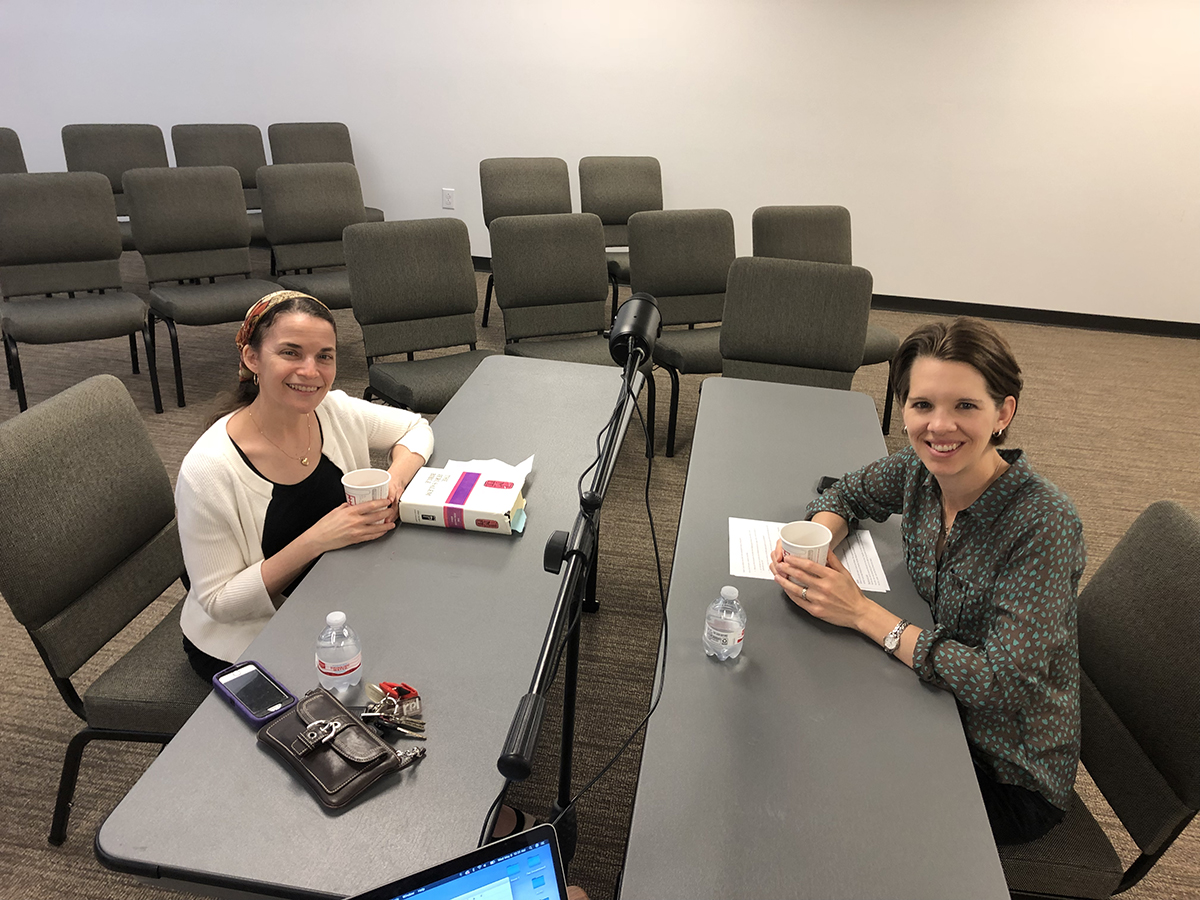
Go deeper into the Grace and Grit/Women In The Bible series as Pastor Blair Thompson-White sips tea with Rabbi Elana Zelony on a stormy morning and talks about the women of scripture in this episode of “Practicing The Presence.”
How To Listen:
Click Here To Listen on our site
Listen on Spotify
Listen on Apple Podcasts
Listen on Google Play
Use a different podcast app?
Search for “Arapaho UMC”
Let Your Life Speak
When was the last time you found yourself “off track”? Maybe you were working on an assignment or home project and got distracted. Or maybe you found yourself on Facebook when you intended to be paying the bills online. Maybe you were
Let Your Life Speak
By Brittany Burrows
When was the last time you found yourself “off track”? Maybe you were working on an assignment or home project and got distracted. Or maybe you found yourself on Facebook when you intended to be paying the bills online. Maybe you were taking care of the children or grandchildren, and found yourself focused on answering emails on your phone instead of being fully present with family. When this happens to us - when we find ourselves off track - at some point, we “wake up” and realize that we need to make a shift back to what we originally meant to be focused on.

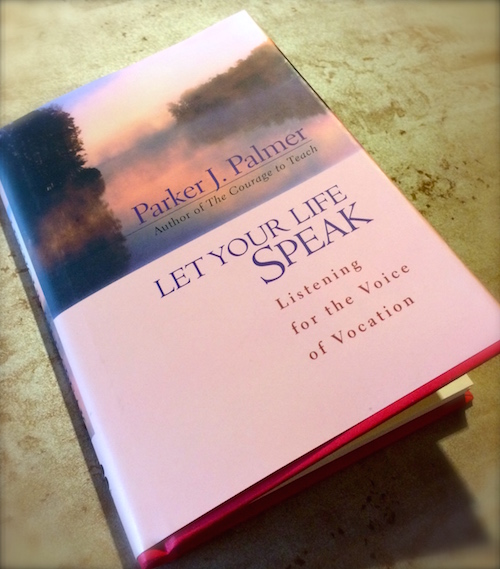
Sometimes we can also end up “off track” from where God has called us to be in our lives. In his book, Let Your Life Speak: Listening for the Voice of Vocation, author Parker Palmer writes that we are born with wholeness and integrity, with no separation between our inner and outer lives. But as time goes on, and we become more concerned with surviving and succeeding in the external world, we can slowly lose touch with our souls, and disappear into our roles. We can get off track from who God created us to be.
We are each born with a God-given identity and unique gifts. Palmer shares about a time when his daughter and infant granddaughter came to stay with him at his home, years ago.
He writes, “Watching my granddaughter from her earliest days on earth, I was able, in my early fifties, to see something that had eluded me as a twenty-something parent: my granddaughter arrived in the world as this kind of person rather than that, or that, or that. She did not show up as raw material to be shaped into whatever image the world might want her to take. She arrived with her own gifted form, with the shape of her own sacred soul.”
Palmer reminds us that God creates each of us in God’s image, with a distinct identity, gifts and talents, unlike anyone else on earth. We often live freely into our unique identities as children, but as we grow up and try to fit the expectations of others and of the world, it becomes common to drift away from our true selves, getting lost in all of our doing and performing.
God calls us to return to ourselves - to discern and remember who we are at our core, to rediscover our passions and gifts, and to use our passion and gifts to serve the world in ways that give us joy.
Each May, I give a copy of Let Your Life Speak to each of our graduating Synergy Wesley Foundation seniors because it is a reminder of the importance of listening for the voice of God within themselves. As our college graduates go throughout their lives, they may at one point or another find themselves “off track,” and I want them to always know that they are invited by God to return to themselves, and to rediscover their passions and gifts.
When each of us lives fully into our true selves, and when we share the gifts we have been given by God, we can transform the world together.